Two weeks ago, CIJ’s Sonia called up to check if it was indeed Darwin’s The Origin of Species on the gazetted list of banned book. Preferring to err on the side of caution and referring to the author’s name in the gazette - ‘F.susilohardo Basuki Hernowo‘ (line item 51) - I told her it was most probably some Indonesian Christian book.
Last night, a foreign correspondent telephoned to make the same inquiry. After the conversation, I thought it best to have this checked out with some friends.
This morning, well, one should by now anticipate the not-so-stunning news.
Yes, it’s Darwin.
~extract from Darwin Banned, Elizabeth Wong
Sunday, February 25, 2007
Darwin's banned
Found at Elizabeth Wong's blog, reporting on the latest gazetted list of banned books, Darwin's 2nd edition of The Origin of Species has been banned. However, what's on the ministry's list is a translated Indonesian version.

Wednesday, February 21, 2007
Independent's Banned Books.
 UK's Independent is coming out with a lovely collection of specially published and packaged Banned Books:
Banned Books is an exclusive collection of 25 cutting-edge titles, censored classics and literary landmarks by authors including Ernest Hemingway, Vladimir Nabokov, Franz Kafka, Andre Gide, Maya Angelou, William Burroughs, Kurt Vonnegut, Henry Miller and Ray Bradbury, specially published and packaged for Independent readers.The covers look lovely! Too bad we might not see them over here, as their distribution is intentionally kept limited.

Tuesday, February 20, 2007
Censorship in UKM?
 I learned about Shamsiah Fakeh's memoir when I was at the IIU seminar recently and Prof. Dr Ruzy Suliza Hashim was talking about the paucity of memoirs written by Malaysian women. She referred to Shamsiah Fakeh's book as one very important example: the author was former head of Communist Party Malaysia's Women's Wing. Dr. Ruzy mentioned that the book was now banned, and of course I was curious to hear another Malaysian banned book story.
But this time there's a twist - it isn't the KKDN (Ministry of Home Affairs) that's the villain of the piece, it was the Minister of Information who ordered the publisher UKM (Universiti Kebangsaan Malaysia) to withdraw the book from sale.
I realised when I started to read about the book online that I'm coming to the story rather late, but I'm unapologetic because I'm fathoming this banned book business out for myself and laying out all the pieces to try to see the whole story.
What is clear from recent bannings of works by and about prominent communists (recent examples being Amir Muhammad's film and the book about the Kathigasu family which still remains in KKDN limbo) is that alternative views of The Emergency are not permitted to become part of the official historical discourse.
This article from 2005 in online newspaper Malaysiakini (you need to be a subscriber to access the piece in its entirety) mentions:
... hostile critics who mounted a media campaign in the Umno-controlled Utusan Malaysia ...So the deciders of what can and cannot be read or seen appear to be the Malay Language press, which then puts pressure on the government. In Amir's case, of course, it was Berita Harian who stirred the whole controversy up after his film had already been given the green light.
The Malaysiankini article continues:
Nowadays, it has become a fashion for many Malaysians to read what the conservative or even reactionary elites do not like to read or would not like them to read. It augurs well for the opening up of the Malaysian minds and challenging the secular monopoly of truth, including holy ones, by Utusan Malaysia, Berita Harian, RTM and some of their fellow scribes in the universities and think-tanks.Apparently not.
However, the memoirs are published only in the context of a series of other memoirs, including those of the very anti-communist Ghazali Shafie, a former Malaysian foreign as well as home minister in the 1970s and also a former British agent of special operations with the anti-Japanese Force 136.
Indeed, whether one finally agrees with Ibrahim Chik or Shamsiah Fakeh or not, the mere publications of their memoirs are indeed intellectually courageous acts which must be commended by all right-minded persons. The question that remains now is whether there would be rational and fair-minded public discussions on the contents of the memoirs.
The UKM authorities were apparently pressured to withdraw sales of Shamsiah Fakeh's book. (Wouldn't one expect a bit more guardianship of knowledge from a university publisher??)
Meanwhile pirated copies of the book are circulating. It's a tough job to keep a good book down ... and intellectuals in the dark.
Monday, February 19, 2007
Take the Banned Book Challenge!
A library in Canada is encouraging readers everywhere to read banned books by issuing this challenge:
Take the Banned Book ChallengeSo what do you plan to read? I might just start with Fahrenheit 451 myself.
Set a goal for yourself to read as many banned or challenged books as you wish between February 26 (Freedom to Read Week) and June 30, 2007. Visit the Pelham Public Library’s Fahrenheit 451: Banned Book Blog to set your goal and report on your progress.
Monday, January 22, 2007
Local author's book banned
Author: Banning my work a denial of history
by Fauwaz Abdul Aziz, Malaysiakini, Jan 20, 07 4:47pm
However, I found a blog entry regarding the abovementioned book "March 8" which is written by K. Arumugam.
by Fauwaz Abdul Aziz, Malaysiakini, Jan 20, 07 4:47pm
The author of a book on the Kampung Medan clashes of 2001 has questioned why the authorities have banned his publication, given that the information contained therein is already available in the public domain.>Can anyone with a Malaysiakini subsciption please help share the details of this article? Thanks.
However, I found a blog entry regarding the abovementioned book "March 8" which is written by K. Arumugam.
“March 8″, which was written in Tamil, records what had happened during the Kampung Medan racially-based clashes in which, til today, is still shrouded in mystery.
It incorporates the research of Dr. Nadarajah, who had studied the events for his PhD thesis.
CIJ: Book banning: Extreme censorship
taken from CIJ website, 9 January 2007
The banning of books is a serious violation of freedom of expression. It should not be done at all, and never done lightly. It is thus distressing that the Deputy Internal Security Minister Datuk Fu Ah Kiow implies that book bannings can be reversed or re-considered if there are complaints from distributors or importers. This implies firstly a lax attitude towards the banning of books, and second it puts the onus for action on book distributors, whereas the responsibility should lie with the Ministry to ensure that no frivolous bannings occur.
CIJ has learnt from local sources that Datuk Fu has responded to media coverage of banned or restricted books by saying that the Ministry has not received complaints about book banning from distributors. He further said that a meeting will be held with the distributors to discuss how the process of banning books can be made more transparent. While CIJ applauds the move to engage in consultation and improve openness within the Ministry, the underlying assumption that books must be banned is disconcerting.
It is also worrying that the Ministry is looking at making the banning process more streamlined, rather than reconsidering whether book banning is important, effective or consistent with Malaysia's aim of achieving Vision 2020 within the next decade and a half. When books are banned, ideas are removed from circulation. This stunts the ability of our students, academics and general public from dealing with controversial ideas, and assumes a paternalistic attitude that is not suited to a country with a high standard of educational achievement.
The Centre for Independent Journalism has, further, consistently condemned the banning of books, and with a group of over 100 individuals and 10 organizations had called for a repeal of the ban of 18 books banned in June 2006. The organization reiterates the call for an end to the banning of books and a repeal of the Printing Presses and Publications Act 1984.
The Centre for Independent Journalism, Malaysia (CIJ) is a media organization that aims to improve current Malaysian journalism practice and independence through advocacy, research and analysis, training and practical work. Started in 2001, CIJ has initiated various projects in developing grassroots communications skills through training, infrastructural support and direct action.
Ends
Issued by
Sonia Randhawa
Executive Director
The banning of books is a serious violation of freedom of expression. It should not be done at all, and never done lightly. It is thus distressing that the Deputy Internal Security Minister Datuk Fu Ah Kiow implies that book bannings can be reversed or re-considered if there are complaints from distributors or importers. This implies firstly a lax attitude towards the banning of books, and second it puts the onus for action on book distributors, whereas the responsibility should lie with the Ministry to ensure that no frivolous bannings occur.
CIJ has learnt from local sources that Datuk Fu has responded to media coverage of banned or restricted books by saying that the Ministry has not received complaints about book banning from distributors. He further said that a meeting will be held with the distributors to discuss how the process of banning books can be made more transparent. While CIJ applauds the move to engage in consultation and improve openness within the Ministry, the underlying assumption that books must be banned is disconcerting.
It is also worrying that the Ministry is looking at making the banning process more streamlined, rather than reconsidering whether book banning is important, effective or consistent with Malaysia's aim of achieving Vision 2020 within the next decade and a half. When books are banned, ideas are removed from circulation. This stunts the ability of our students, academics and general public from dealing with controversial ideas, and assumes a paternalistic attitude that is not suited to a country with a high standard of educational achievement.
The Centre for Independent Journalism has, further, consistently condemned the banning of books, and with a group of over 100 individuals and 10 organizations had called for a repeal of the ban of 18 books banned in June 2006. The organization reiterates the call for an end to the banning of books and a repeal of the Printing Presses and Publications Act 1984.
The Centre for Independent Journalism, Malaysia (CIJ) is a media organization that aims to improve current Malaysian journalism practice and independence through advocacy, research and analysis, training and practical work. Started in 2001, CIJ has initiated various projects in developing grassroots communications skills through training, infrastructural support and direct action.
Ends
Issued by
Sonia Randhawa
Executive Director
Thursday, January 11, 2007
Books in KKDN Limbo
In the previous post I mentioned that publishers and distributors could apply for the green light from KKDN headquarters in Putrajaya for books they might fear had a chance of being "restricted" by the officers in Johor (as far as one can predict these things!), and could appeal if they felt that books were being "restricted" unfairly. (As Deputy Minister Datuk Fu Ah Kiow had promised.)
Well, an article in yesterday's Sun illustrated that while this might be so in theory, in practice books submitted in the HQ might well fall into a beaurocratic black hole.
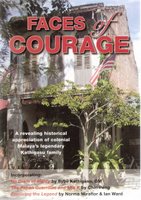 Copies of a book called Faces of Courage, an "historical appreciation of colonial Malaya's legendary Kathigasu family" were apparently seized by KKDN officers in Johor Bahru in March. An appeal was immediately made to the KKDN headquarters in Putrajaya. Nine months on, no decision on the book has been reached by the officers of the publications and Quranic text control division. Principal assistant secretary Yaakob Samad has refused to say why the book was being withheld.
James Wong Wing On writes about Sybil Kathigasu in Malaysiakini:
It is of course the section by Chin Peng which might be the sticking point for the KKDN. However, his own memoir Alias Chin Peng: My Side of History is available in the bookshops.
Media Masters managing director Ian Ward describes the book as:
And nine months in the booktrade is a very long time, especially when you are a small local publisher trying to recoup your investment.
Well, an article in yesterday's Sun illustrated that while this might be so in theory, in practice books submitted in the HQ might well fall into a beaurocratic black hole.
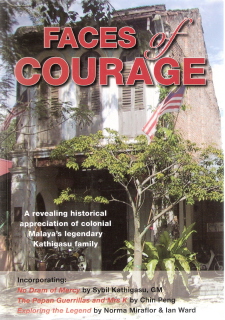 Copies of a book called Faces of Courage, an "historical appreciation of colonial Malaya's legendary Kathigasu family" were apparently seized by KKDN officers in Johor Bahru in March. An appeal was immediately made to the KKDN headquarters in Putrajaya. Nine months on, no decision on the book has been reached by the officers of the publications and Quranic text control division. Principal assistant secretary Yaakob Samad has refused to say why the book was being withheld.
James Wong Wing On writes about Sybil Kathigasu in Malaysiakini:
The Christian Eurasian woman who was very un-apologetically pro-colonial and spoke Cantonese - was particularly remembered by older generations of Chinese residents of Ipoh and its satellite township Papan as one simple, kind-hearted and extraordinarily brave soul who saved many lives and inspired those in despair during the 44-month Japanese occupation from December 1941 to August 1945. To those who are younger, her legend is preserved in her wartime memoirs No Dram of Mercy first published in 1954.Faces of Courage brings together the 1954 memoirs of Sybil Kathigasu (which has long been available in bookshops here), with a piece by former Communist Party Malaysia leader Chin Peng about the help he and his men received from the Kathigasus during the Emergency; and an account of the subsequent life of Dawn Kathigasu and an interview with Olga Kathigasu, 86, who resides in Ipoh.
According to the legend, the simple housewife of Dr AC Kathigasu, who operated a clinic at No.141 at Brewster Road in Ipoh, secretly helped to supply medicines and medical services to the anti-Japanese guerrilla forces in Papan where she and her family lived as war refugees. She also helped them to illegally keep shortwave radio sets and listen to broadcasts from Britain and the outside world. Because of those ‘subversive’ activities she and her husband were arrested, tortured and detained until the war ended.
It is of course the section by Chin Peng which might be the sticking point for the KKDN. However, his own memoir Alias Chin Peng: My Side of History is available in the bookshops.
Media Masters managing director Ian Ward describes the book as:
... a meticulously researched project based on documented material and actual oral interviews.It paints a very human picture of the Kathigasu story but one that is in significant contrast to the myths that have developed around this subject over the decades. It corrects a number of serious factual errors that have long accompanied the retelling of the Kathigasu saga.The book is clearly of great local interest and an important historical document, and should be made available to readers here. I managed to buy a copy a month or two back from Silverfish.
And nine months in the booktrade is a very long time, especially when you are a small local publisher trying to recoup your investment.
Tuesday, January 09, 2007
Books ... or Ikan Bilis?
The restricted books issue has gone quiet, hasn't it, after our initial outpourings of outrage and a brief flurry of press?
What happens next?
Well, Animah's letter has gone to the Prime Minister, the Minister of Culture, and many more individuals and agencies. I am waiting for her go ahead before I paste it up here. We need to give all these bodies time to digest and respond to it.
Meanwhile we wait and see.
Raman says
I was talking to one of the larger local publishers the other day, with two of the books on the restricted list - two of the extremely innocent titles we all were joking about.
Perhaps also there is fear. Raman reports that another book distributor had promised to give Raman a list of books which had been restricted, but was told:
The books that are restricted, by the way, are not the only books missing from our shelves. There are now the books the distributors aren't even attempting to bring in.
I spoke to a distributor recently who said that he had brought in just a handful of copies of a book published in Singapore which contained three memoirs by individuals involved in the Emergency. (I have the book and it is of definite historical interest.)
He was sure that if he brought in copies in larger quantities to supply the bookshops, his books would be confiscated in Johor.
How many more books don't even make it here?
But he did say that with any title he feels might be considered controversial, he submits a copy to the Ministry headquarters in Putrajaya. And that so far he has had no trouble getting approval.
So please distributors and publishers, do appeal. For the sake of all those who love books (and let's put it bluntly, keep you in business.) And please let us know what happens.
What happens next?
Well, Animah's letter has gone to the Prime Minister, the Minister of Culture, and many more individuals and agencies. I am waiting for her go ahead before I paste it up here. We need to give all these bodies time to digest and respond to it.
Meanwhile we wait and see.
Raman says
We have been told that this matter was actually raised in the parliament but it was neatly sidestepped and ignored. Truth is, very few in the Government, and in the opposition, actually care. There are more 'important' issues.Frankly, this cannot be a fight for book lovers alone. Those in the book industry must also express their dismay over the bannings.
I was talking to one of the larger local publishers the other day, with two of the books on the restricted list - two of the extremely innocent titles we all were joking about.
"Any idea why your books were restricted?"Oh yes. Didn't Deputy Internal Security Minister, Datuk Fu Ah Kiow say the other day:
"None at all."
"Have you tried appealing?"
"Can we?"
If the distributors feel that any of the restrictions are unfair, they can always appeal by sending the book to our Putrajaya headquarters for review. We will see what the problem is and correct it if necessary.Perhaps there is inertia in the book industry and as Raman suggests, those involved might feel more comfortable "selling rice, ikan bilis and sugar instead". One book restricted, never mind there are plenty more books on the shelves.
Perhaps also there is fear. Raman reports that another book distributor had promised to give Raman a list of books which had been restricted, but was told:
No lah, my boss does not want to get involved, he said. After they stop all our shipment from Singapore, susah lah.As Raman says:
This is precisely what book banners and book burners thrive on: fear. And book banning and book burning is where it all starts.(Do read Raman's post in full as he works up a better head of outrage than I'm capable of.)
The books that are restricted, by the way, are not the only books missing from our shelves. There are now the books the distributors aren't even attempting to bring in.
I spoke to a distributor recently who said that he had brought in just a handful of copies of a book published in Singapore which contained three memoirs by individuals involved in the Emergency. (I have the book and it is of definite historical interest.)
He was sure that if he brought in copies in larger quantities to supply the bookshops, his books would be confiscated in Johor.
How many more books don't even make it here?
But he did say that with any title he feels might be considered controversial, he submits a copy to the Ministry headquarters in Putrajaya. And that so far he has had no trouble getting approval.
So please distributors and publishers, do appeal. For the sake of all those who love books (and let's put it bluntly, keep you in business.) And please let us know what happens.
Monday, January 08, 2007
Censors make genies disappear
article taken from The Sun
PETALING JAYA (Jan 8, 2007): It seems that reading about genies is inappropriate for local readers, and the authorities have chosen to black out the information -- rather than let readers discern for themselves if it is beneficial to read and know about them.
In the Dec 23 issue of The Economist an entire two-page article has been torn off and two sentences from another article have been blacked out.
The first article, a special report entitled Jinn -- Born of fire is about the belief among Muslims in Somalia and Afghanistan in the existence of the jinn or genie.
In the second article, A child of Bethlehem -- No end of history, an excerpt about Muslim and Christian women visiting a shrine related to the Blessed Virgin Mary has been obliterated with black ink.
When the matter was brought to his attention, Deputy Minister of Internal Security Datuk Fu Ah Kiow said he was not aware of this.
However, he pointed out that the government has the responsibility to censor all imported publications to ensure their contents are appropriate and suitable for Malaysian readers.
"We have guidelines in doing our job. We do not allow certain things such as pornographic materials and writings which are seditious, sensitive to religion and contain subversive elements," he told theSun.
However, in the day and age of the Internet, readers can read the whole version of the two articles in The Economist on its website at www.economist.com -- which makes the ministry's attempt to filter information seem futile.
"That is beside the point," Fu said, adding that while no one can control the Internet, the government has the power to control the kind of books and magazines being circulated in the country.
"It does not mean that if the Internet allows it, we should also allow it. It is just the same logic as nude photos. People can get it freely over the Internet but we do not allow them to be brought in here easily," he said.
While there is a guideline, the interpretation has not been consistent across the different entry points to the country and the ministry is trying to address this.
He said the ministry is improving the procedure and guidelines on the approval of permits to bring in foreign publications.
This includes streamlining the procedure at the entry points and creating better understanding between the ministry and local importers and publishers.
"The ministry's Publications and Quranic Text Control Division will meet book importers and publishers soon and if all goes well, we will have a better standardised guideline by March.
"We want a better understanding so that the industry will not incur unnecessary costs when they bring in books which will end up being banned and our officials will not have extra work for no reason," he said.
At present, he said, although there is a guideline, enforcement officers at different entry points tend to make different judgments when deciding on whether a particular book should be allowed into the country.
That is why we are also training our staff so that everyone will agree on the same thing when looking at a certain picture, he said.
Updated: 12:44AM Mon, 08 Jan 2007
PETALING JAYA (Jan 8, 2007): It seems that reading about genies is inappropriate for local readers, and the authorities have chosen to black out the information -- rather than let readers discern for themselves if it is beneficial to read and know about them.
In the Dec 23 issue of The Economist an entire two-page article has been torn off and two sentences from another article have been blacked out.
The first article, a special report entitled Jinn -- Born of fire is about the belief among Muslims in Somalia and Afghanistan in the existence of the jinn or genie.
In the second article, A child of Bethlehem -- No end of history, an excerpt about Muslim and Christian women visiting a shrine related to the Blessed Virgin Mary has been obliterated with black ink.
When the matter was brought to his attention, Deputy Minister of Internal Security Datuk Fu Ah Kiow said he was not aware of this.
However, he pointed out that the government has the responsibility to censor all imported publications to ensure their contents are appropriate and suitable for Malaysian readers.
"We have guidelines in doing our job. We do not allow certain things such as pornographic materials and writings which are seditious, sensitive to religion and contain subversive elements," he told theSun.
However, in the day and age of the Internet, readers can read the whole version of the two articles in The Economist on its website at www.economist.com -- which makes the ministry's attempt to filter information seem futile.
"That is beside the point," Fu said, adding that while no one can control the Internet, the government has the power to control the kind of books and magazines being circulated in the country.
"It does not mean that if the Internet allows it, we should also allow it. It is just the same logic as nude photos. People can get it freely over the Internet but we do not allow them to be brought in here easily," he said.
While there is a guideline, the interpretation has not been consistent across the different entry points to the country and the ministry is trying to address this.
He said the ministry is improving the procedure and guidelines on the approval of permits to bring in foreign publications.
This includes streamlining the procedure at the entry points and creating better understanding between the ministry and local importers and publishers.
"The ministry's Publications and Quranic Text Control Division will meet book importers and publishers soon and if all goes well, we will have a better standardised guideline by March.
"We want a better understanding so that the industry will not incur unnecessary costs when they bring in books which will end up being banned and our officials will not have extra work for no reason," he said.
At present, he said, although there is a guideline, enforcement officers at different entry points tend to make different judgments when deciding on whether a particular book should be allowed into the country.
That is why we are also training our staff so that everyone will agree on the same thing when looking at a certain picture, he said.
Updated: 12:44AM Mon, 08 Jan 2007
Friday, December 08, 2006
SUN: Don't Shield Society from Books
In Monday's Sun, Literature Professor Lim Chee Seng, was asked to comment on the restricted books issue. He said:
Instead of shielding society from books and ideas deemed offensive or pernicious by banning them, there should be more effort to train society to have the critical skills to deal with such information ... In a democracy, you should be training people to be able to deal with these books - that is if they are pernicious - to argue, to resist error and to stand up, and not try to keep the books away as if they (society) are children.And he quotes a line from British literary critic and theorist on literature and education I.R. Richards:
A book is a machine to think with.Malaysia Today picked up the article and there are some interesting comments.
Monday, December 04, 2006
SUN: Ministry Will Bar 'Offensive' Publications
 Jacqueline Ann Surin's article about "restricted books", in the Sun yesterday.
I've pasted below the parts of the article I think are most telling:
The secretary of the publications and Quranic texts control division, Che Din Yusoh, said the minister could use "absolute discretion" to gazette "undesirable publications" as banned under Section 7 of the Printing Presses and Publications Act (PPPA).And it's that line that really scares me. Particularly as it refers to books which were previously freely available.
At the same time, Section 9 empowers ministry officers at Malaysia's entry points to refuse the importation of "undesirable publications" that are deemed to threaten public order, morality, security or national interest, even if they have not been gazetted as banned.
... Che Din said he could not confirm if Silverfish Books' list of titles had been banned, noting that officers at each entry point might have different lists.
He said that sometimes, books were confiscated at entry point and only later gazetted as banned. The publishers may also be asked to return these books to the sender.
"As the country's moral guardian, we cannot let these books in," Che Din said, adding that most of these titles were offensive because of their sexual or violent content.
"Some children's books may also have offensive content and contravene conditions in the PPPA."
He said some classics also had to be banned because they contained liberal Western ideas that were "not conducive" to Malaysian society.
Why has the ground shifted so radically in the last few months?
Sunday, December 03, 2006
THE STAR: Banned book list baffling
In case anyone missed it, The Star finally had a story on the Book Banning issue in the news pages today, on page 3 no less:
Banned book list baffling
Deputy Internal Security Minister, Datuk Fu Ah Kiow said disallowed entries were different from gazetted bans.
Banned book list baffling
Deputy Internal Security Minister, Datuk Fu Ah Kiow said disallowed entries were different from gazetted bans.
“If the distributors feel that any of the restrictions are unfair, they can always appeal by sending the book to our Putrajaya headquarters for review. We will see what the problem is and correct it if necessary.”
He added that there were no blanket bans on any authors, including Rushdie, whose controversial 1988 novel, The Satanic Verses, resulted in the late Ayatollah Khomeini of Iran issuing a fatwa calling for his death.
“We ban titles, not authors,” he said.
The Story Behind The Name
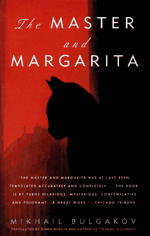 Perhaps some of you have already Googled the title of this blog. But I'm going to tell you the story behind it anyway.
"Manuscripts don't burn" is a quote from Mikhail Bulgakov's book Master and Margarita. Bulgakov's book was only published after his death for a good reason: it could have landed him in prison. During Bulgakov's time, the U.S.S.R government was pretty much like how China is today, practising severe censorship and not allowing criticism of the government in any form, even satire. Most kids nowadays wouldn't understand jokes or allusions to "being shipped off to Siberia" but before the Iron Curtain gave way, it was a very real threat.
Here's an excerpt from the forward to the 1997 translation of the book by Richard Pevear and Larissa Volokhonsky:
Mikhail Bulgakov worked on this luminous book throughout one of the
darkest decades of the century. His last revisions were dictated to his wife
a few weeks before his death in 1940 at the age of forty-nine. For him,
there was never any question of publishing the novel. The mere existence of
the manuscript, had it come to the knowledge of Stalin's police, would
almost certainly have led to the permanent disappearance of its author.
darkest decades of the century. His last revisions were dictated to his wife
a few weeks before his death in 1940 at the age of forty-nine. For him,
there was never any question of publishing the novel. The mere existence of
the manuscript, had it come to the knowledge of Stalin's police, would
almost certainly have led to the permanent disappearance of its author.
When the book was finally published nearly three decades after his death, it caused a sensation. Of course, it got banned. But that added more to its appeal and soon "Manuscripts Don't Burn" became a rallying cry for oppressed writers, playwrights and poets. Supposedly writers even memorised their work so as never to fear the authorities seizing their work. Bulgakov himself had to rewrite the novel from memory after he had burnt his draft in a picque of despair.
All that significance went over my head when I was seven, unfortunately. My father passed it to me, knowing that I consumed books like candy and he liked boasting that his little girl was already reading Kipling and Tolstoy. Looking back, I can say that reading the book influenced me more than I realised.
On the surface, it's a fun farce - there's a talking cat, a smarmy Faust-reminiscent Satan, a very down-to-earth Jesus Christ and Pontius Pilate with a migraine. But the heart of it is Bulgakov's very real pain of living in fear, of living where people tried not just to put your body in chains but your mind too.
Spinach7 Digital has a review of it where the writer says:
"The point that I sucked out of the novel was this: great literature endures political repression; writers have a responsibility to push on through censorship. Bulgakov was supposed to write a novel that idealised Lenin — instead he coughed up an apocryphal satire featuring a talking cat. ...we have a responsibility to make the most of the opportunities still afforded to us to get our point across — because the way things are going, they may not last. .. ‘freedom of speech’ will be a vague memory, unless we get our words out now. Start by reading this book. Finish by writing your own."
There are people ridiculing what we're doing on this blog. But rather than be defensive, I'd rather keep remembering Bulgakov and all the other writers who suffered for what they wrote. For condoning the undue and unnecessary banning of their writing, it's just a step away from us condoning their getting locked-up. "Manuscripts don't burn." Not if we don't let them.
All that significance went over my head when I was seven, unfortunately. My father passed it to me, knowing that I consumed books like candy and he liked boasting that his little girl was already reading Kipling and Tolstoy. Looking back, I can say that reading the book influenced me more than I realised.
On the surface, it's a fun farce - there's a talking cat, a smarmy Faust-reminiscent Satan, a very down-to-earth Jesus Christ and Pontius Pilate with a migraine. But the heart of it is Bulgakov's very real pain of living in fear, of living where people tried not just to put your body in chains but your mind too.
Spinach7 Digital has a review of it where the writer says:
"The point that I sucked out of the novel was this: great literature endures political repression; writers have a responsibility to push on through censorship. Bulgakov was supposed to write a novel that idealised Lenin — instead he coughed up an apocryphal satire featuring a talking cat. ...we have a responsibility to make the most of the opportunities still afforded to us to get our point across — because the way things are going, they may not last. .. ‘freedom of speech’ will be a vague memory, unless we get our words out now. Start by reading this book. Finish by writing your own."
There are people ridiculing what we're doing on this blog. But rather than be defensive, I'd rather keep remembering Bulgakov and all the other writers who suffered for what they wrote. For condoning the undue and unnecessary banning of their writing, it's just a step away from us condoning their getting locked-up. "Manuscripts don't burn." Not if we don't let them.
Friday, December 01, 2006
Latest
 Things seem to have gone very quiet on the "restricted" books issue, but behind the scenes much is happening. Animah Kosai has prepared a letter which will be sent out to the right parties in the next day or two. As soon as I am able to post the letter here, I will do. (The pic is Animah reading out the letter at our Readings on Saturday. Fifty names will be attached.)
Raman at Silverfish told me today that he has been contacted by journalists from two different English language dailies who have been speaking to the relevant minister to get some firm facts.
Politely bringing the issue to attention of the right authorities might just work. In a reasonable society anyway, that's how things should happen.
More news soon.
Oh ... and thanks to all those folks around the world who have shown support by linking this blog.
Tuesday, November 07, 2006
The Complete Official Lists
I found - at last, and my blur fault not their's, the website of the Ministry of Internal Security and it has very clear lists linked from the sidebar of all the officially banned books from 2000 to the present.
To make it even easier the links are here so that you can have a browse:
To make it even easier the links are here so that you can have a browse:
2000And - I love this touch - you can even listen the Ministry's theme song at the same time.
2001
2002
2003
2004
2005
2006
Sunday, November 05, 2006
Banned Books Malaysia 101
 I'm writing this because there seems to be confusion still about the two different categories of "banned" books in Malaysia and what the implications of each are, and because I keep getting asked the same questions over and over.
It is a complicated business and it's taken me a while to cotton on. This is a sort of summary of the posts I have written in the past and which are indexed in the sidebar of this blog.
I do not pretend to have any kind of expert knowledge - everything I know comes from talking to Raman, folks from the marketing departments of the bigger bookstores, distributors, and from getting tip offs from friends when they have found themselves unable to buy books. I also apologize in advance if I get anything wrong - these are the facts as I understand them. There is much I do not know and much I am not in a position to find out (it would take probably a good investigative journalist to unravel the situation).
The Home Ministry or Kementarian Dalam Negeri (KDN) has the power to ban books that it feels are in some way "detrimental to public order" or liable in some way to"contribute to immorality".
But, it seems, there are two different systems of banning and you need to understand the difference between them.
The first category of banned books is as Raman says:
... the official ban with the papers signed off by the Home Minister or his DeputyThese books are listed on a document which is usually made public through the press. (Raman has put up a pdf of the 2006 list.) Says Raman:
.. this is quite clear-cut (even if you don't agree with it).Many of the books banned were to do with religion. Reasons have never been given for the banning of particular titles - particularly worrying as many of them are books which were openly available previously.
The DAP asked for an explanation of the bannings, but never received one. (I checked back some time later with MP Theresa Kok and she said she had had no reply to her letter.) It is possible only to guess at the political subtext.
The penalty for possessing books officially banned books is severe, as Erna has pointed out. However to my knowledge, no-one has yet been prosecuted for possession, and no premises raided. (My knowledge, it has to be said, does not extend very far.)
The second category of banned books are those which are referred to by the KDN as "restricted books". Raman quite rightly calls this method of banning "arbitrary and unpredictable", and describes it as "pure Kafka". In a sense this makes it even more dangerous, particularly as large numbers of books are involved and there are serious implications for the whole book retailing industry (and at a time when another ministry - that of Culture, Arts and Tourism - is enlisting the help and goodwill of the industry to promote reading in Malaysia!)
Let me go back a step and explain a little bit of what I understand about how the book industry in Malaysia works.
Most of the books that come into Malaysia come from the UK because of an exisiting trade agreement. Publishers ship orders to Singapore where the distributors warehouse them for distribution to the both the Singaporean and Malaysian markets.
When the bookshops in Malaysia want books from Singapore, those books have to pass through customs at Johor Bahru. And it is here that the problem lies.
The KDN officers in JB go through the consignments and confiscate any books on the spot that they do not feel suitable for a Malaysian readership.
Who are these guys? Ordinary civil servants with the kind of educational profile civil servants typically have (i.e. not really the best folks to judge the merits or demerits of literature written in English, and with probably very little background in reading even in their own language.) Raman describes this kind of civil servant rather more colourfully as:
... some barely literate little Napoleonand perhaps we can give him the benfit of the doubt since he has had some experience of trying to clear books through JB customs himself.
Why are the books deemed unsuitable and confiscated? In most cases I have no idea and neither has anyone I've spoken to, including the distributors and the bookshops! The KDN send a form letter to the distributors which states no reason for the confiscation.
I don't know what happens to the confiscated books, but I believe that the distributors receive no compensation. As one of them told Raman - you simply don't make a fuss, or you risk losing the whole consignment. They lose money, and I wouldn't be surprised if this cost gets passed on eventually to the consumer.
Raman listed the books from just one distributor. A few weeks ago I visited another distributor (on quite different business) and she showed me a whole file of the form letters for books that had been confiscated!
The distributors inform the bookshops about which books are "restricted". I'm sure the marketing departments of bookshops in KL must feel very angry about this issue, since it eats into their profits and stops them providing the full service for their customers they pride themselves on.
However (and this is why some of you are totally confused and say "The book's not banned I saw it on the shelves ..."):
you may still find copies of these books which the bookshops had brought in before the ban was imposed
and
you may find copies of the book they were brought in via a different port of entry. I suspect that books ordered from the US (by Kinoukuniya and Borders in particular) come in via either Port Klang or via KLIA where the officers may be less strict.
and
the book may be banned under one ISBN number, but a different version may get through (as in the case of The Divine Secrets of the YaYa Sisterhood where it was only the bikini tops worn by the women in one paperback version that appears to have given offence)
and
at least one novel has two different titles, and only one is "restricted"!
and
sometimes a book is banned in one language but a foreign language version gets through. (The Karma Sutra was apparently listed in the past as officially banned but there are apparently places where you can get an Indian language version.)
All this creates a kind of slippery banned-but-not-banned territory where no-one - bookshops, distributors, or readers know where they stand. Bookshops and distributors become more cautious about the books they order because they don't want to lose money, and they don't want to be on the wrong side of the law. But so many books have become restricted in the past few months - and so arbitrarily - that they must be wondering where the banning ends!
And if you can ban literary classics (like Midnight's Children and Things Fall Apart) and Sponge Bob Squarepants, where does the banning logically end?? When there are no more books left in the bookshops?
Book buyers don't know which books are banned and don't realise that their consumer choices are being limited in this way. Most probably don't care. But it is I think part of a wider issue, that of basic freedom of speech and thought.
As far as I know there is no illegality about possessing or selling "restricted books": full official ban would only be in place if the Ministry decided to gazette the titles. As Raman notes:
... none of the books that have been proscribed by the KDN this year (according to the distributors) have been gazetted.So there you have it, in a nutshell. (A pretty big nutshell!)
I don't know if the Ministers and policy makers of 1) the Ministry of Home Affairs and b) the Ministry of Culture Arts and Tourism are aware of the problem. But they should be. And it would be good if they could find the time to sit down and talk through the issues raised by a group of people who love both the country ... and books.
(Hmmm ... nice banner but can't remember whose blog I lifted it from. Plagiarism!!)
StarMag: What Basis for Bans?
This is probably the first piece of media coverage on the ban, by StarMag columnist in her Tots and Teens column today...
What basis for bans?
(Sunday November 5, 2006)
For the rest of the story, go HERE.
What basis for bans?
(Sunday November 5, 2006)
A COLLEAGUE sent me a link to a list of books that have been banned by the Home Ministry.
You can check it out at http://www.silverfishbooks. com/RestrictedBooks1.htm.
Looking at the list and trying to think (or not think, as the case may be) like the person in charge of deciding what Malaysians can or can’t read, I could (sort of) see how some of the titles might be deemed unsuitable. That is, I can imagine how someone who doesn’t read or has a dodgy command of the English language or simply doesn’t get out much could maybe feel that some of these books, if read, would cause lasting damage of the morals and pysche of Malaysians.
For the rest of the story, go HERE.
Saturday, November 04, 2006
Why are we here?
I do not doubt some people think that what we're doing here is rather silly. Why should we care so much about banning books? Books aren't starving, in need of medical aid and no one would hold a star-studded concert to benefit anti-banning efforts.
Personally, I am what I am because I read. Reading gave me my command of the language, reading helped me learn critical thought, reading is the foundation from which I have found my vocation - to write. The written word is a powerful, precious thing and to deny others the joy of free access to good, quality reading material is no different than denying them access to education.
Let me share a quote from a book I've just finished: Ursula Le Guin's Voices. It tells the tale of a people brought under subjugation by a race of illiterates, a race so afraid of the written word they destroy books and libraries. At the end of the book, one character pleads to another to read to people, to let them know books won't hurt them - "To let them know, to let them see that books aren't demons, that our history, our hearts, our freedom's written in them?"
Books embody the soul's creative flight. Why must we cage our souls?
Personally, I am what I am because I read. Reading gave me my command of the language, reading helped me learn critical thought, reading is the foundation from which I have found my vocation - to write. The written word is a powerful, precious thing and to deny others the joy of free access to good, quality reading material is no different than denying them access to education.
Let me share a quote from a book I've just finished: Ursula Le Guin's Voices. It tells the tale of a people brought under subjugation by a race of illiterates, a race so afraid of the written word they destroy books and libraries. At the end of the book, one character pleads to another to read to people, to let them know books won't hurt them - "To let them know, to let them see that books aren't demons, that our history, our hearts, our freedom's written in them?"
Books embody the soul's creative flight. Why must we cage our souls?
Friday, November 03, 2006
Possession Penalty
I found the following at this site.
It's dated April 2003. But, I'm curious, can anyone tell us if the penalty still exists? And where are the lists of banned books (issued by KDN), if there is such a penalty? Doesn't possession mean that members of the public are affected, hence we should be told of this list?
...The statement issued by the KDN stated that the "printing, import, production, reproduction, sale, circulation, distribution and possession of books listed under the schedule are banned in the country". A jail sentence of up to three years and/or a maximum fine of 20,000 Malaysian ringgits (approx. £3,340) will be given to anyone found guilty of breaking this ban.
It's dated April 2003. But, I'm curious, can anyone tell us if the penalty still exists? And where are the lists of banned books (issued by KDN), if there is such a penalty? Doesn't possession mean that members of the public are affected, hence we should be told of this list?
Bannings & burnings in history
Looking up the history of book bannings, I found this site which also has a pdf version of the chronological events of book burning and bannings throughout history. I've extracted a few of them here below.
259–210 B.C.: The Chinese emperor Shih Huang Ti is said to have buried alive 460 Confucian scholars to control the writing of history in his time. In 212 B.C., he burned all the books in his kingdom, retaining only a single copy of each for the Royal Library—and those were destroyed before his death. With all previous historical records destroyed, he thought history could be said to begin with him.
A.D. 8: The Roman poet Ovid was banished from Rome for writing Ars Amatoria (The Art of Love). He died in exile in Greece eight years later. All Ovid’s works were burned by Savonarola in Florence in 1497, and an English translation of Ars Amatoria was banned by U.S. Customs in 1928.
35: The Roman emperor Caligula opposed the reading of The Odyssey by Homer, written more than 300 years before. He thought the epic poem was dangerous because it expressed Greek ideas of freedom.
1559: For hundreds of years, the Roman Catholic Church listed books that were prohibited to its members; but in this year, Pope Paul IV established the Index Librorum Prohibitorum. For more than 400 years this was the definitive list of books that Roman Catholics were told not to read. It was one of the most powerful censorship tools in the world.
1597: The original version of Shakespeare’s Richard II contained a scene in which the king was deposed from his throne. Queen Elizabeth I was so angry that she ordered the scene removed from all copies of the play.
1614: Sir Walter Raleigh’s book The History of the World was banned by King James I of England for "being too saucy in censuring princes."
1624: Martin Luther’s German translation of the Bible was burnt in Germany by order of the Pope.
1933: A series of massive bonfires in Nazi Germany burned thousands of books written by Jews, communists, and others. Included were the works of John Dos Passos, Albert Einstein, Sigmund Freud, Ernest Hemingway, Helen Keller, Lenin, Jack London, Thomas Mann, Karl Marx, Erich Maria Remarque, Upton Sinclair, Stalin, and Leon Trotsky.
1954: Mickey Mouse comics were banned in East Berlin because Mickey was said to be an "anti-Red rebel."
Read the rest here.
259–210 B.C.: The Chinese emperor Shih Huang Ti is said to have buried alive 460 Confucian scholars to control the writing of history in his time. In 212 B.C., he burned all the books in his kingdom, retaining only a single copy of each for the Royal Library—and those were destroyed before his death. With all previous historical records destroyed, he thought history could be said to begin with him.
A.D. 8: The Roman poet Ovid was banished from Rome for writing Ars Amatoria (The Art of Love). He died in exile in Greece eight years later. All Ovid’s works were burned by Savonarola in Florence in 1497, and an English translation of Ars Amatoria was banned by U.S. Customs in 1928.
35: The Roman emperor Caligula opposed the reading of The Odyssey by Homer, written more than 300 years before. He thought the epic poem was dangerous because it expressed Greek ideas of freedom.
1559: For hundreds of years, the Roman Catholic Church listed books that were prohibited to its members; but in this year, Pope Paul IV established the Index Librorum Prohibitorum. For more than 400 years this was the definitive list of books that Roman Catholics were told not to read. It was one of the most powerful censorship tools in the world.
1597: The original version of Shakespeare’s Richard II contained a scene in which the king was deposed from his throne. Queen Elizabeth I was so angry that she ordered the scene removed from all copies of the play.
1614: Sir Walter Raleigh’s book The History of the World was banned by King James I of England for "being too saucy in censuring princes."
1624: Martin Luther’s German translation of the Bible was burnt in Germany by order of the Pope.
1933: A series of massive bonfires in Nazi Germany burned thousands of books written by Jews, communists, and others. Included were the works of John Dos Passos, Albert Einstein, Sigmund Freud, Ernest Hemingway, Helen Keller, Lenin, Jack London, Thomas Mann, Karl Marx, Erich Maria Remarque, Upton Sinclair, Stalin, and Leon Trotsky.
1954: Mickey Mouse comics were banned in East Berlin because Mickey was said to be an "anti-Red rebel."
Read the rest here.
Subscribe to:
Posts (Atom)